#57 Stone vs Crusher Run: Which Base Do You Actually Need?
Clean #57 drains; crusher run compacts. Here is how to pick between the two most-ordered stones — and why the best driveways use both.
Cost breakdowns, step-by-step builds, and plain-English material comparisons — written to answer the question you actually searched for.
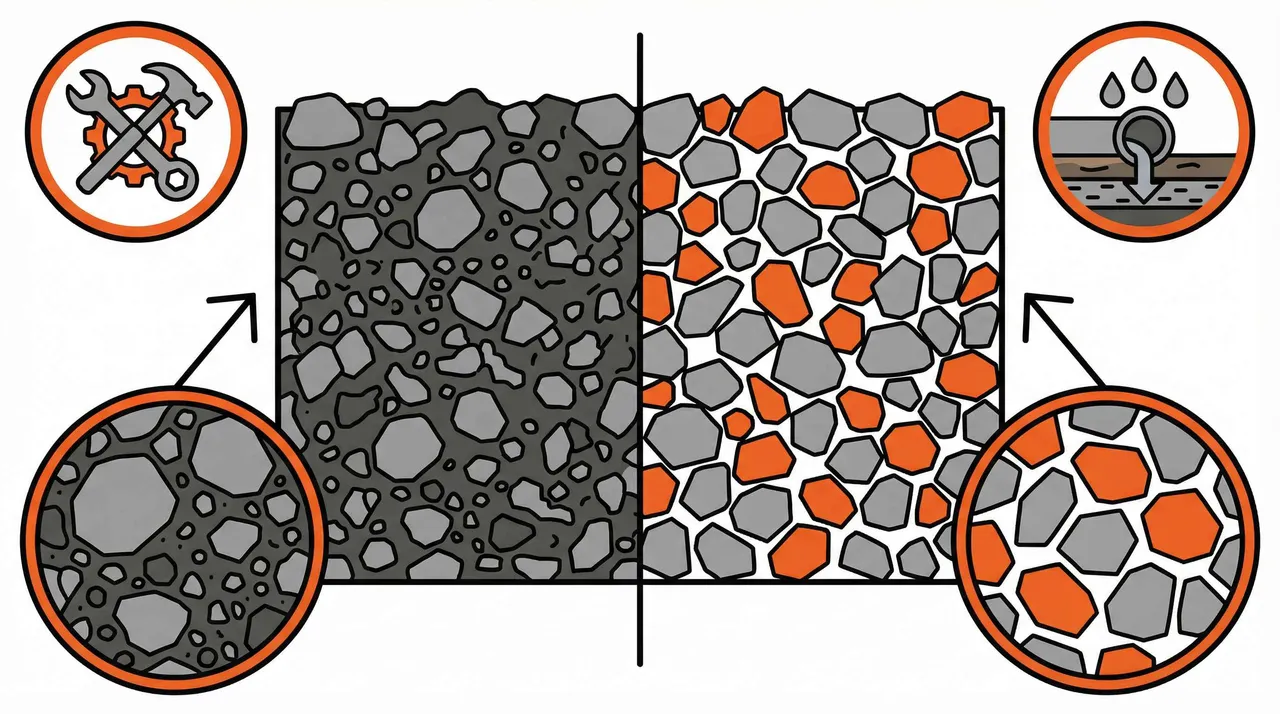
Clean #57 drains; crusher run compacts. Here is how to pick between the two most-ordered stones — and why the best driveways use both.
Asphalt millings cost $10–$30 per ton, the cheapest driveway surface available. Here is why they are so cheap, where to source them, and how compaction actually…
Not all gravel belongs on a driveway. We rank the five materials homeowners actually use — crusher run, #57 stone, asphalt millings, crushed concrete, and pea…
Pea gravel feels great and goes everywhere. Decomposed granite walks like pavement until it rains. Here is how the four common walkway gravels compare on footing,…
A contractor-level walkthrough of building a mortarless stone retaining wall that survives frost, saturated soil, and a decade of freeze-thaw cycles.
Pea gravel and smooth river rock are the paw-friendly picks for a dog run. Here is how to choose, how deep to lay it and what…
The full build sequence for a gravel driveway that lasts: excavation, geotextile fabric, compacted crusher run base, #57 stone surface, and a proper crown.
Path width, excavation depth, fabric, base versus surface layers, and the edging that keeps a gravel walkway from spreading into the lawn.
Sizing, clearances, a gravel drainage base, and the one stone-selection rule that keeps a backyard fire pit from cracking or throwing hot fragments.
Bagged stone costs 4–8x bulk price once you cross about half a cubic yard. Here is the exact crossover math and a checklist for comparing supplier…